
Overall, Austin has a relatively high degree of soil instability, making house foundation problems fairly common. Austin and the parts of Texas that surround it are situated in an area of unique geology and geography that directly influences its demand for Austin foundation repair. Austin is the capital of the state of Texas and the county seat of Travis County. Austin has a total area of 415 square miles and a population in excess of 700,000 people which makes it the fourth largest city in Texas and the 15th largest in the United States. Because of its size, climate, and geology, Austin is one of the biggest markets for concrete slab repair and home foundation repair in Texas.
For more information about Dawson’s Austin Foundation Repair services, you can click on one of the links below.
· Request a FREE, no obligation Foundation Inspection* in Austin, Texas
· Browse the Foundation Repair Methods commonly used in Austin, Texas
· See a step-by-step walkthrough of the Foundation Repair Process
Soil Characteristics As They Affect Foundation Repair in Austin TX
The Austin, Texas area has limestone formations, bluffs, rock outcroppings, chalk and a wide variety of soils including loam, clay and gravel. Of these characteristics, the clay soils present the greatest problem to homeowners because they tend to drastically shrink and swell with changes in moisture content. The soil types change dramatically from west to east in the Austin area. In general, the western area of Austin and Travis county are situated on the edge of the Edwards Plateau and its limestone foundation.
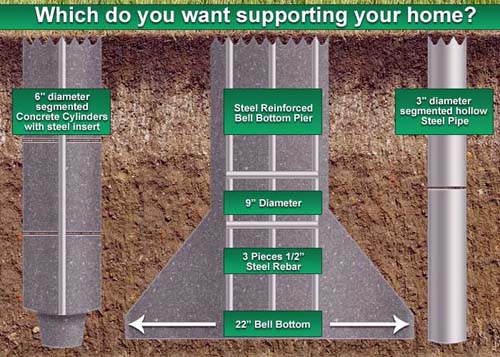
This western area has far fewer residential foundation problems because of this limestone base. In the central part of the county, the Colorado River drainage system begins and the soil composition changes into a mixture of limestone, chalk and clay. Moving eastward, the soil composition becomes a mixture of topsoil and clay which expands and contracts depending on the moisture level of the soil. These shifts in moisture content / soil conditions present many challenges to homeowners by creating cracks in their home’s concrete slab which can only be fixed with professional foundation repair.
The United States Department of Agriculture, Natural Resources Conservation Service issued an extensive report about the soils in Travis County and the Austin area. Engineers and other technically inclined individuals may want to read the report in full. One part of particular interest, however, appears on page 98 of the report:
Foundations
Shrink-swell characteristics of the soil need to be considered in designing a building foundation, particularly if piers are not used below the slab. Such clay soils as those of the Houston Black, San Saba, and Ferris series are particularly poorly suited to building sites. They swell when wet and shrink when dry. This shrinking and swelling exerts such pressure that walls and foundations crack unless they are specially reinforced, sidewalks and driveways crack, and streets and sidewalks deteriorate more quickly (plate V).
The characteristics of Texas soil present Austin homeowners with challenges in maintaining and preventing damage to their home’s concrete slab foundation. The underlying conditions frequently necessitate foundation repair in Austin. For more information about how geological conditions can affect a home’s foundation, you can read a report written by engineer and PhD recipient Tom Witherspoon about the technical issues associated with Texas soils and how they affect your foundation repair choices.
Climate Influences on Home Foundation Repair in Austin Texas
Contributing to the need for house and home foundation repair in the Austin, Texas area is its location at the intersection of four major ecological regions. Its diversity of climate is considered “temperate-to-hot” or “humid subtropical” but the climate can vary significantly. At different times the climate can appear to be hot and dry (desert), tropical, or very wet (rain). This diversity of climates gives rise to diverse ecological and biological aspects of the area. There are many unique animals and plants found in the Austin, Texas area. In general, the area is characterized by hot summers and mild winters.
Austin receives an average of 33.6 inches (853.4 mm) of rain per year. A majority of the rain arrives in the spring and to a lesser extent, the fall. The area does receive severe thunderstorms on occasion during the spring months. The average summer high temperature is 94°F (34°C). However, temperatures above 100°F (38°C) are common. The highest recorded temperature was 112 °F (44 °C) in September 2000. Winters are mild and dry and Austin averages 88 days per year with a high temperature below 45 °F (7 °C).
If you would like to take a detailed look at the soil in your neighborhood, consider looking at the United States Department of Agriculture’s Soil Survey Tool. It will give you an in-depth look at exactly what type of soil your home sits on and the characteristics one can expect from soils of that type.
For your convenience, you may utilize a tutorial on how to use the Soil Survey Tool that we have compiled.
* (free for homes not involved in real estate transactions)